
Madison County Court Dockets Defined
A docket is the court's ordered log of case activity. It can list the filing date, party names, hearing settings, motions, notices, orders, continuances, judgments, pleas, and final disposition. A calendar is narrower. It groups matters set before a court on a given date, while the docket follows one case over time. Madison County users may need both: the calendar to locate a current setting and the case action summary to understand what happened before it.
Dockets reflect the court that owns the matter. Circuit Court handles felonies, major civil suits, domestic relations, and appeals from lower courts. District Court handles misdemeanors, preliminary felony stages, traffic, small claims, and district civil work. Municipal courts handle city ordinance cases, city misdemeanors, and many city traffic tickets. Probate proceedings use a separate office and access path.
Find Madison County Dockets Online
Alacourt ACCESS, also known as Just One Look, is the official paid portal for Alabama Circuit and District Court case details. It supports name and case-number searches for criminal, civil, small claims, state traffic, domestic relations, and child support matters. A report can include status, setting dates, party information, financial history, and a detailed case action summary. Name and case-number searches each cost $9.99. A no-match result still counts, so verify the venue before paying.
- Confirm whether the matter belongs to Circuit, District, Probate, or municipal court.
- Open Alacourt for Circuit or District cases and select name or case-number search.
- Use the full official case number when available to avoid similar-name results.
- Review status, setting dates, parties, financial history, and actions together.
- Check the local calendar or clerk if a current courtroom setting is unclear.
The 23rd Judicial Circuit posts a court calendar and local court material. Its calendar complements Alacourt but does not replace the full case action summary. The Circuit Clerk site also offers a Find My Courtroom route. If a setting has changed, the case's latest official notice and direct clerk confirmation are more reliable than an older printed copy.
Madison County Docket Entry Fields
Read a docket from identity to action. The case number ties each entry to one file. Madison County public garnishment notices show examples such as 47-SM-2022-000096.00, 47-DV-2024-903602.00, and 47-CV-2018-902330.00. The observed 47 prefix identifies the county, while SM, DV, and CV are case-type codes. The date beside an entry may be a filing, action, publication, or hearing date, so the entry label matters.
| Field | What It Shows |
|---|---|
| Case number | County prefix, type code, year, sequence, and suffix identifying the case. |
| Entry date | Date a filing, notice, order, setting, or other action was recorded. |
| Event type | Motion, hearing, continuance, order, judgment, plea, sentence, or other case action. |
| Party or filer | Person, lawyer, agency, or court actor tied to the entry. |
| Setting date | Scheduled hearing or trial date included in the Alacourt report. |
| Status | The reported state of the case, which must be read with later entries. |
| Document link | An available image or PDF, sometimes sold separately from the search. |
Madison County Courts and Calendars
Madison County is the sole county in Alabama's 23rd Judicial Circuit. The Circuit Court and District Court share the Circuit Clerk as record keeper, but they serve different case loads. The 23rd Judicial Circuit reported 12,072 Circuit filings and 29,341 District filings in 2024. That scale makes court and case identification vital. Many Madison County settings belong to District Court rather than Circuit Court.
- Circuit Court dockets cover felonies, major civil cases, domestic relations, and lower-court appeals.
- District Court dockets cover misdemeanors, traffic, small claims, and district civil or criminal matters.
- Madison Municipal Court maintains city misdemeanor, traffic, warrant, and ordinance settings.
- Huntsville Municipal Court maintains Huntsville city citation and ordinance settings.
- Probate Court maintains its own proceeding records outside the Circuit Clerk route.
For judge and courtroom assignment, the official Circuit Clerk directories list Circuit and District judges, rooms, and phone numbers. A judge directory is not a daily docket. Use it after the case report or setting notice identifies the assigned judge.
Madison County Docket vs Case File
The docket is an index and timeline. The full record contains the actual pleadings, motions, orders, judgments, and other filed documents that are open to the requester. A docket may say that an order was entered without displaying its text. Alacourt charges separately for document images, and restricted documents may not be available even when a public action entry confirms that something was filed.
| Docket | Full Case Record | |
|---|---|---|
| Format | List of entries | Full documents |
| Contents | Dates, labels, settings, status, and action summaries | Pleadings, orders, notices, and available exhibits |
| Access | Paid Alacourt report, calendar, or clerk confirmation | Paid images or a formal clerk records request |
| Use | Track progress and locate settings | Read the substance of filings and rulings |
A case detail can report a disposition, but the judgment or sentencing order gives the exact court language. For a broader look at available filings, use the Madison County court records resource.
Read Madison County Court Dockets
Start with the parties, court, and case number. Then read entries in date order. A motion is a request for the court to act. An order is the judge's ruling or command. A continuance moves a setting to a later date. A disposition is the outcome of a charge or case, while a judgment resolves claims or liability. An arraignment is the criminal hearing where charges are read and a plea is entered.
Do not treat a filing as a ruling. A motion may appear before the judge grants, denies, or sets it for hearing. Likewise, a charge entry is not a conviction. Later pleas, dismissals, verdicts, and sentencing entries control the outcome. Financial history may show a balance without explaining whether a later payment or adjustment has posted.
Note: A setting shown online should be checked against the newest official notice before travel to a Madison County courtroom.
Madison County Orders and Dockets
The 23rd Judicial Circuit standing-orders page groups orders for family, Circuit civil, District civil, Circuit criminal, District criminal, juvenile, and Veterans Court matters. Standing orders set procedures for a class of cases; they are not entries unique to one party's docket. Recent listings include criminal discovery, capital-case assignment, Veterans Court, and juvenile interpreter matters.
The assigned image comes from that official Madison County standing-orders source.
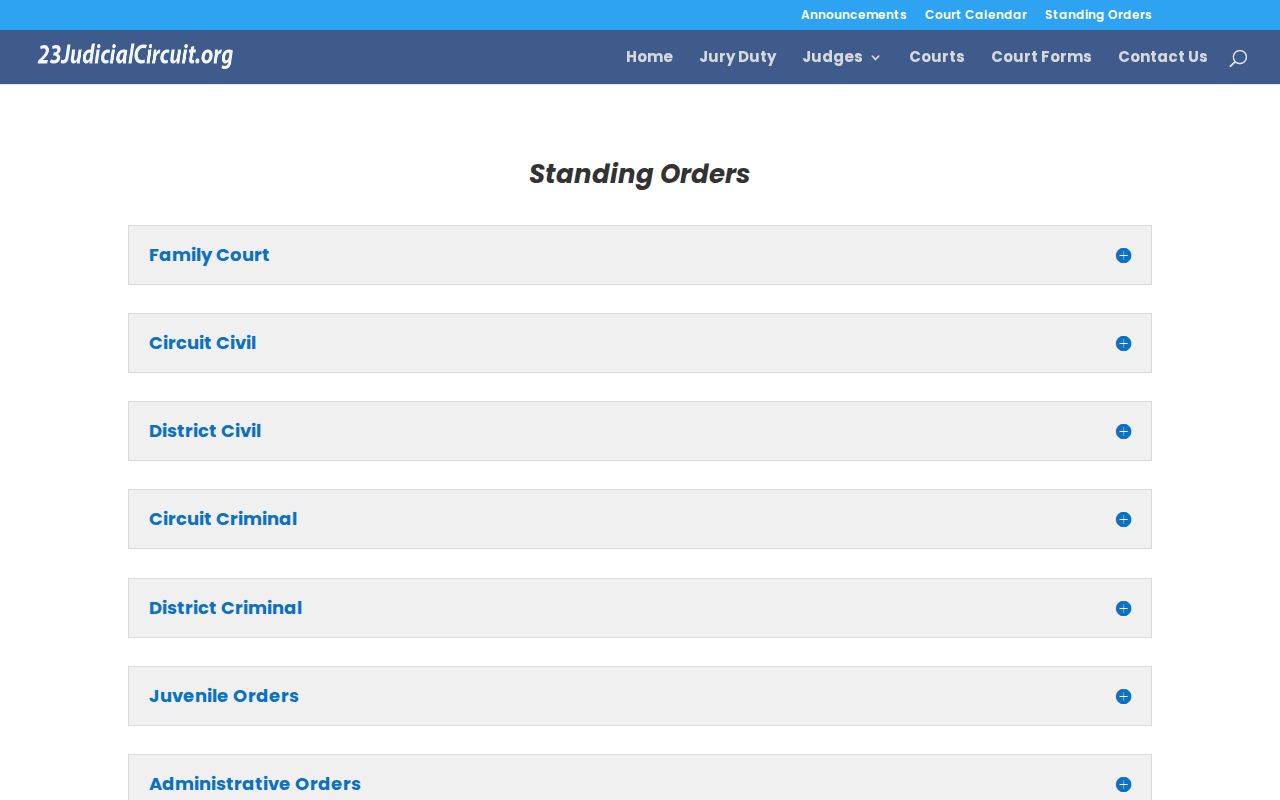
These orders help explain docket events, but the individual case action summary remains the place to confirm whether an order was entered in a specific file.
Madison County also posts public garnishment notices with party captions, case numbers, notice PDFs, written order PDFs, and publication dates. That list is a focused public-notice channel, not a complete docket search. It can still help a judgment creditor or debtor connect a public notice to the correct civil or small-claims case.
Missed Madison County Court Dates
A missed setting can lead to a bench warrant, failure-to-appear entry, added costs, or another court action depending on the case. The jail roster has shown descriptions such as failure to appear traffic and alias warrant, but that roster includes only people already booked. It cannot confirm every outstanding warrant or every missed docket event.
Contact the handling court. Huntsville city bond and magistrate information uses 256-427-7817. Madison Municipal Court uses 256-772-5617. Madison County District Court clerk bond information uses 256-532-3373. Ask for the current case status and required next action without relying on an old calendar printout.
City venue changes the next step. Madison Municipal Court lists Friday arraignments for traffic and non-traffic cases, while Thursday settings include probation reviews and trials. Huntsville city matters follow the Huntsville Municipal Court route. County misdemeanor and felony settings use District or Circuit Court. The detention facility also notes that Huntsville city inmates who do not bond may face city court the next business day, while Madison city inmates may have court Tuesday at the jail or Thursday at the municipal building based on the charges. A jail status line cannot stand in for the newest docket notice.
Appellate Dockets Beyond Madison County
State appeals may move from Circuit Court to the Alabama Court of Civil Appeals, Alabama Court of Criminal Appeals, or Alabama Supreme Court based on subject matter. Federal appeals are separate. The U.S. Court of Appeals for the Eleventh Circuit hears appeals from federal district courts, not ordinary appeals from Madison County Circuit Court.
The assigned Eleventh Circuit official source illustrates the separate federal appellate docket channel.
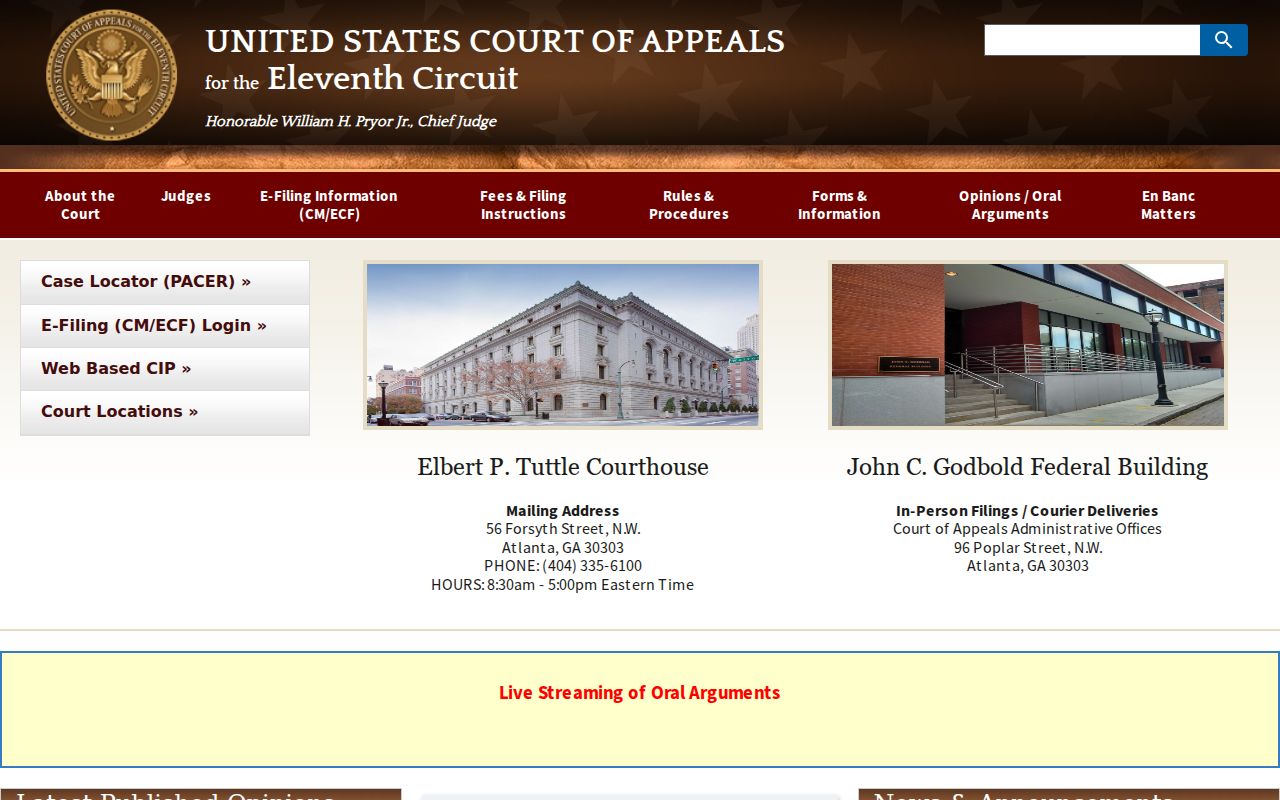
A searcher should use this court only when the underlying case belongs to the federal system and has reached the appellate level.
State and federal appeal routes should not be mixed. A Madison County Circuit Court decision may proceed to the Alabama Court of Civil Appeals, Alabama Court of Criminal Appeals, or Alabama Supreme Court according to the subject. A federal Northern District decision can proceed to the Eleventh Circuit. Federal cases use PACER and CM/ECF, while state trial-court case actions use Alacourt and the Circuit Clerk. When a case has moved to appeal, the trial docket can show the lower-court history, but the appellate docket is the source for briefs, appellate orders, and the appeal's current status.